
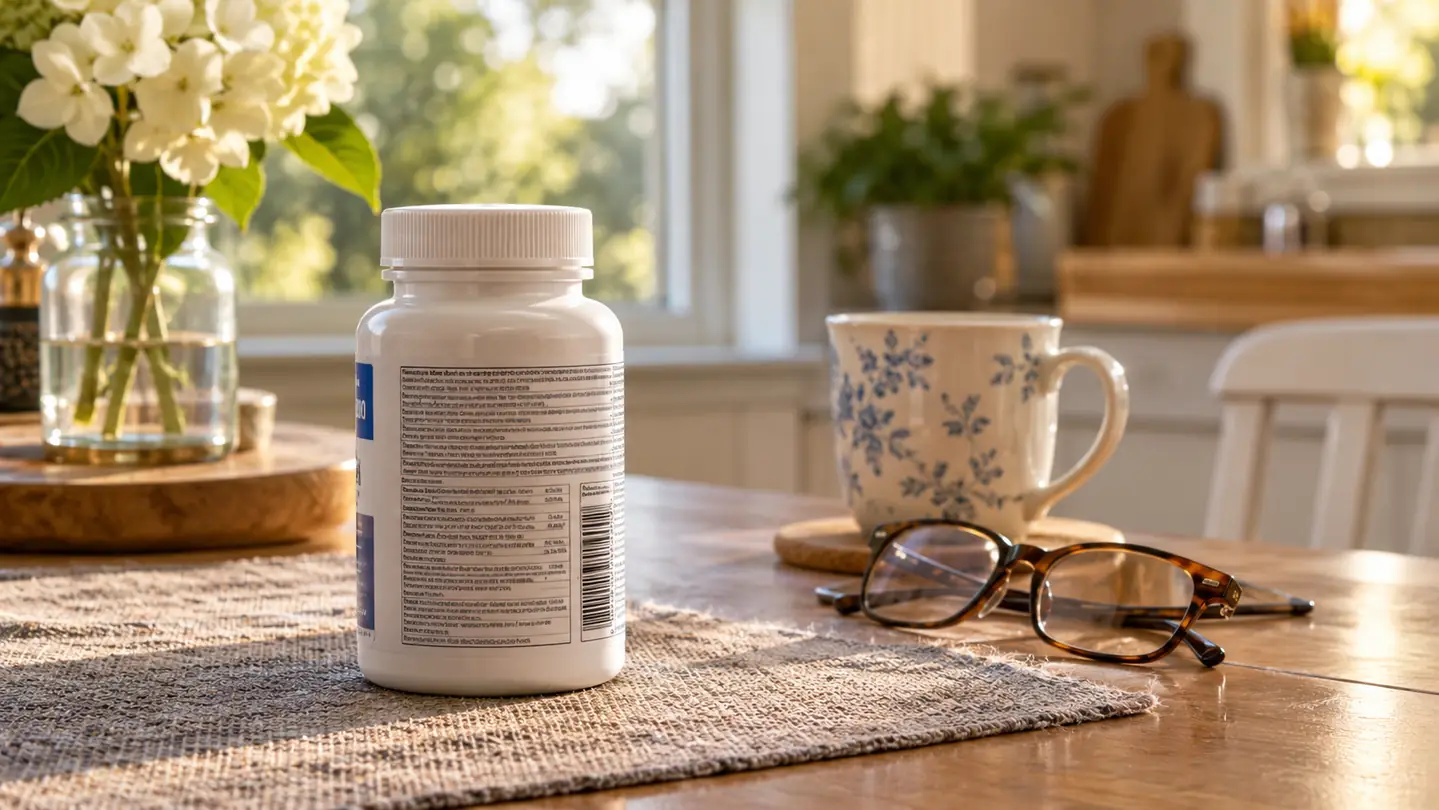
If you have ever stood in the supplement aisle with two fish oil bottles in your hands, you know the feeling. One says 1000 mg in big letters. The other says 1200 mg. Both have a little panel on the back with numbers that look like they were printed for someone else. I have been that person, and I have also spent 26 years reading ingredient labels for a living in a school cafeteria. The front of a bottle is advertising. The back is where the facts live.
My name is Marla Hendricks. I am 58, retired from one elementary school cafeteria in Conway, Arkansas, where I served about 400 lunches a day for 26 years. I am not a doctor, nurse or dietitian, and I do not play one in this article. At my yearly physical in late February 2026, I asked Dr. Alvarez which basic supplements made sense for me. I had printed five Amazon label pages at home and brought them to that visit. She read them and okayed them for me. I then showed the same pages to Dana at my pharmacy counter. One of those pages was for Nature Made Fish Oil. I bought it in one Amazon order with four other bottles and started all five on Monday, March 2, 2026. I have taken it for eight months and I am on my sixth bottle.
The label I read before I bought: 600 mg omega-3 per two softgels
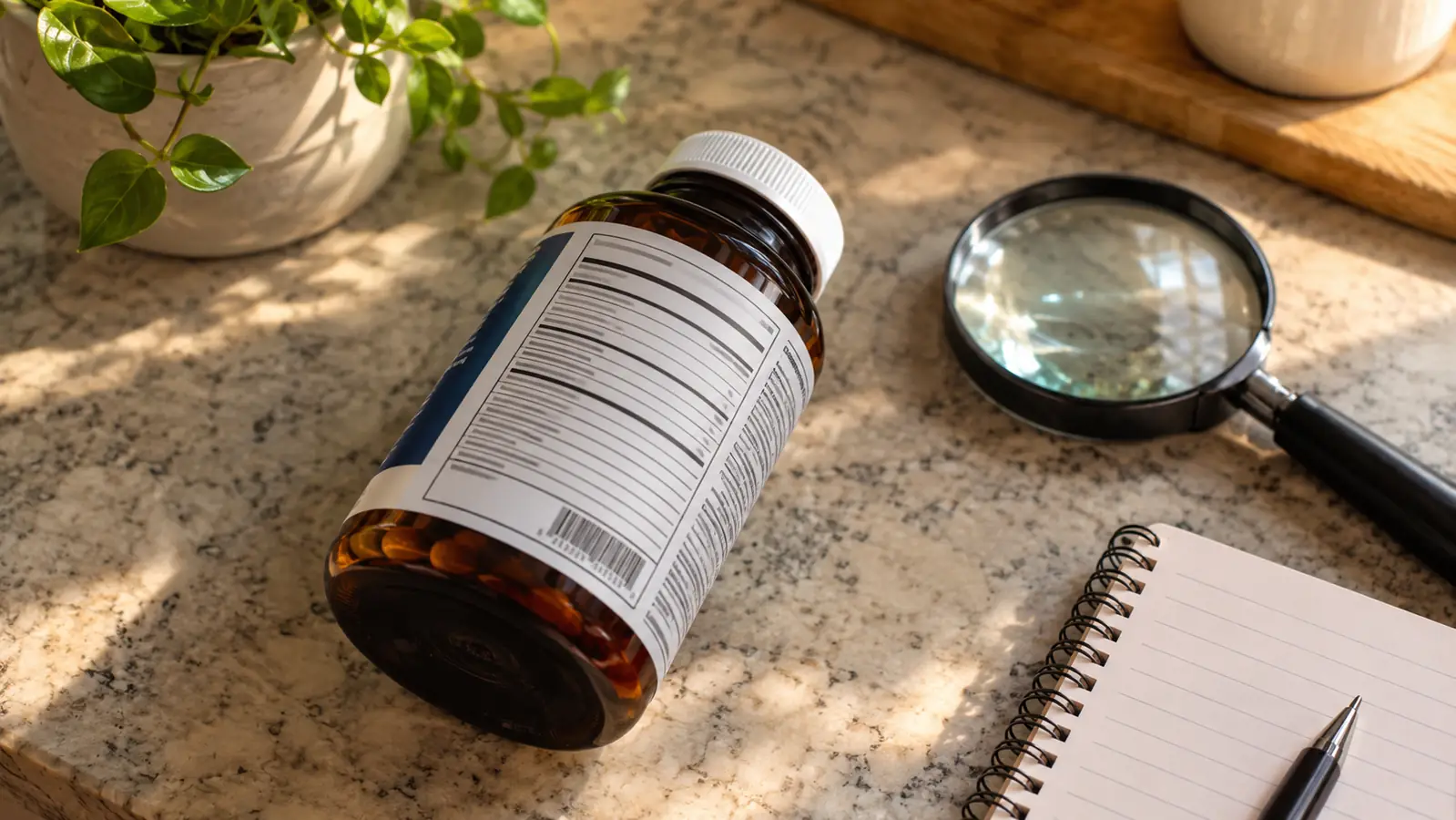
Nature Made Fish Oil puts the serving size, the omega-3 amount, and the EPA and DHA where I can find them. That is the bottle I have kept on my pantry shelf for eight months.
Amazon Check Today's Price on Amazon →The Five Things I Check on a Fish Oil Label
I do not read a fish oil label the way I read a cereal box. I am not looking for a flavor or a slogan. I am looking for five facts, in this order. Once you know the order, most of the confusion goes away.
Step 1: Start With the Serving Size, Not the 1000 mg on the Front
The first number I find is the serving size. On the Nature Made bottle it is two softgels. The bottle holds 90 softgels, and the label says that is 45 servings. That means the 1000 mg on the front is the fish oil in one softgel, not the omega-3. If I took one softgel and thought I was getting the full dose, I would be wrong. This is the most common label trap I see, and it has nothing to do with fish oil. It is just arithmetic.
I take two softgels at breakfast, which is the serving the label describes. I do not split it to make the bottle last longer. The bottle says 45 servings, and at two softgels a day that is a 45-day supply. I like knowing that because it tells me when to put the next bottle on the list. No pill organizer, no guessing. Just the serving size and the count.
Step 2: Separate the Fish Oil From the Omega-3
The front of the Nature Made bottle says 1000 mg fish oil. That is the weight of the oil, not the weight of the omega-3 fats inside it. The back label is the one that tells you what you are actually getting. One serving of two softgels provides 600 mg of omega-3 fatty acids. The same line puts 500 mg of EPA and DHA in parentheses. That is the part I care about, because EPA and DHA are the omega-3 fats people talk about when they talk about fish oil.
I have not eaten fish since I was a girl. I just do not like it. So for me, the point of a fish oil softgel is to cover the fish I do not eat, not to chase the biggest number on the shelf. A bottle can say 1000 mg or 1200 mg and still have a modest omega-3 line. I would rather see the omega-3 number clearly than see a big fish oil number and have to guess. Nature Made puts both numbers on the label, and that is why I keep buying it.
Step 3: Find EPA and DHA, Not Just the Word Omega-3
Omega-3 is a family, not a single thing. The label may list EPA and DHA separately. It may list them together, the way Nature Made does with 500 mg EPA and DHA. It may list ALA from flax, which is a different fat and not the same thing. If a label says only 1000 mg omega-3 and never tells you how much EPA and DHA is in the serving, I put it back. I am not a chemist, but I can read a panel. If the panel will not tell me, I do not need to guess.
I also do not assume that more is better for me. Dr. Alvarez okayed the dose on this label for me, and Dana looked at the same page at the pharmacy counter. That is the order I would suggest to anyone: read the label, then ask. A label is not a prescription. It is a fact sheet. The fact sheet for this bottle says two softgels give 600 mg omega-3, with 500 mg EPA and DHA. That is what I take, and that is what I asked about before I took it.
Step 4: Look for the Purification Line and the Other Ingredients
Fish oil labels often carry a line about purification. The Nature Made label says the softgels are purified to remove mercury and other contaminants. That line matters to me because fish is the source, and I want to know the maker thought about what else comes with it. I am not able to test a bottle in my kitchen. I can only read what the label says, and this one says it plainly.
Then I read the rest of the panel. This bottle is gluten free and dairy free, with no artificial flavors. It is unflavored. Those details are not the reason I buy it, but they are the reason I do not worry about it sitting next to my other breakfast bottles. I have no allergy to fish, but if you do, that is a conversation for your doctor or pharmacist, not a label reader on the internet. I check the panel for what is in the softgel and what the maker says was removed. Then I stop.
Step 5: Match the Label to Your Actual Day
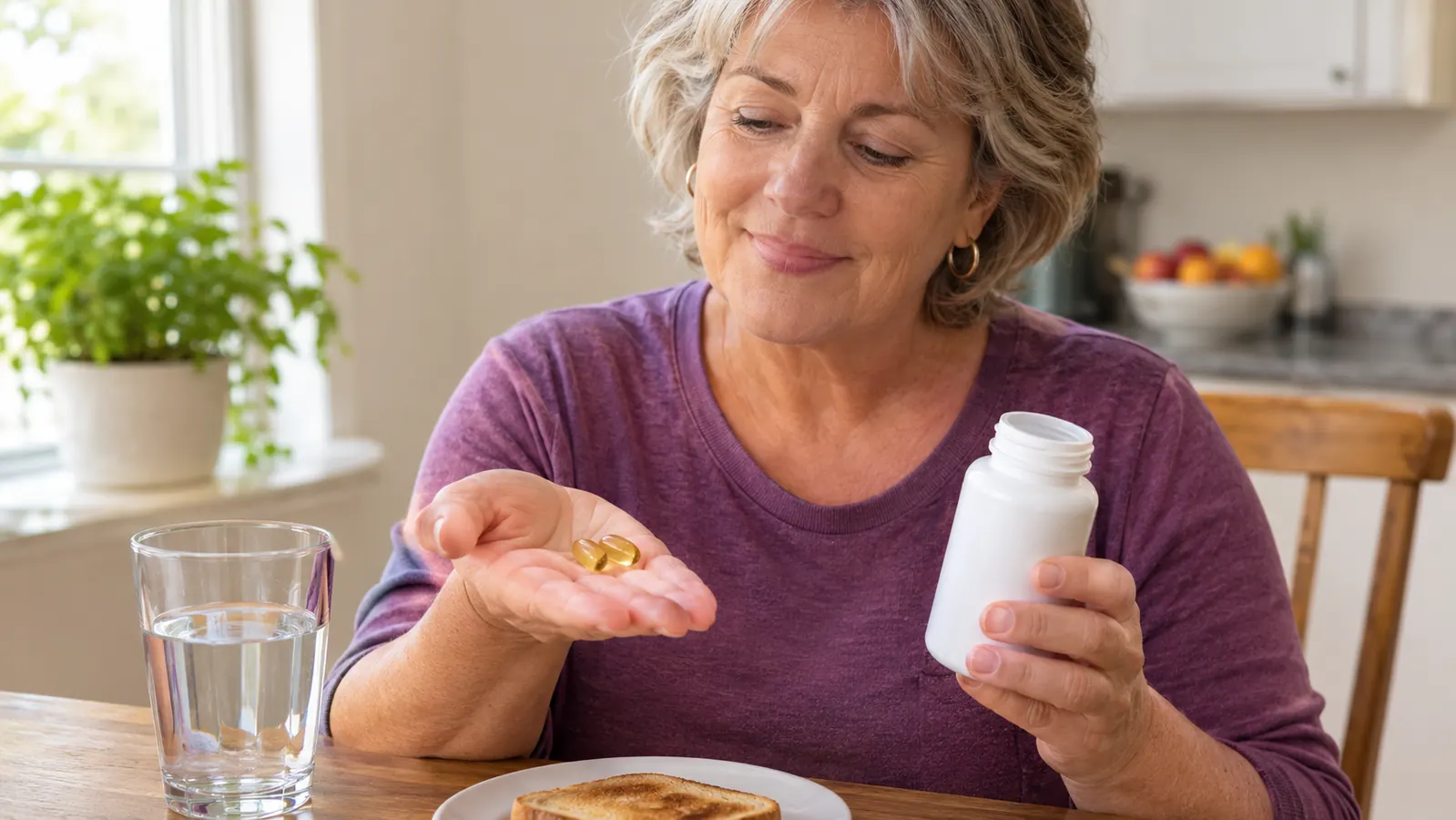
The last step is the one that decides whether the bottle works in your life. The label says adults take two softgels daily with water and a meal. My breakfast is at 7:30, and it is oatmeal and one slice of toast, the same as it has been for years. I take my two softgels then, with water, alongside the other three bottles I keep on the pantry shelf. That is my routine. It is not fancy, but it is repeatable.
The one time I did not follow the label, I knew it. On my second morning, Tuesday, March 3, I was in a hurry. I took the two softgels with water before I ate, even though I had read 'with a meal' on the bottle. I burped fish for about an hour. I mentioned it to Dana a few days later, and she said to do what the label says. She was right. I have taken them with breakfast ever since, and it has not happened again. That is the whole story. No drama, just a label I should have followed the first time.
The front of the bottle says 1000 mg. The line that matters is on the back: 600 mg of omega-3 per two softgels, with 500 mg EPA and DHA.
What Else Helps
A few small habits make a label easier to live with. I keep all five of my bottles on the second pantry shelf beside the coffee. I take them down at the meal and put them back. That way the fish oil is in the same place as the breakfast I am already eating, and I do not have to remember a separate step. The pantry shelf is enough.
I also keep the serving size in my head, not the front number. Two softgels. 90 in the bottle. 45 servings. 600 mg omega-3. 500 mg EPA and DHA. That is the label in one breath. If I am in the store and I see a different bottle, I turn it over and look for the same five facts. I have looked at krill oil labels in the pharmacy aisle, but I have never bought krill oil. I cannot tell you how it feels. I can tell you that the label is read the same way, and that is a separate conversation from this one.
The other thing that helps is asking. I brought my printed pages to Dr. Alvarez and to Dana before I bought anything. I did not ask them to pick a brand for me. I asked them to look at what I had already read. That is a small difference, but it matters. I am the one who has to take the bottle every morning. They are the ones who can tell me if the label fits my health. I am not a health authority, and I do not want to sound like one.
Who This Label Suits
This bottle suits a person who wants a fish oil label with the serving size, the omega-3 amount, and the EPA and DHA all in plain sight. It suits someone who does not eat fish and wants a softgel to cover that gap, the way I do. It suits someone who is fine with two softgels at a meal and a 45-day bottle. It also suits someone who likes a label that says it was purified to remove mercury and other contaminants, because that is a question I would want answered before I bought any fish oil.
It does not suit someone who wants to take one softgel and call it done. The serving is two. It does not suit someone who wants a flavored softgel, because this one is unflavored. It does not suit someone who is looking for a label to replace a conversation with a doctor or pharmacist. I am not making a claim beyond what the bottle says. The bottle says heart health support. It does not say it will fix anything, and I would not repeat that if it did.
Who Should Ask First
If you take prescription medication, especially a blood thinner, ask your doctor or pharmacist before you add fish oil. I take no prescription medication, so I cannot speak to that from experience. I can only say that the question is worth asking before the bottle is opened, not after. The same goes for anyone facing surgery or anyone who has been told to watch a specific nutrient. I am a retired cafeteria manager with a printed label page, not a clinician.
If you have a fish allergy, ask first. If you are pregnant or nursing, ask first. If you are giving a supplement to a child, ask first. The label on this bottle is written for adults, and it says two softgels daily with water and a meal. That is the extent of what I can tell you. The rest belongs to your doctor or pharmacist, and I would rather say that plainly than pretend a label can answer every question.
Two softgels with breakfast, and a label I can read without squinting
If you want a fish oil that puts the serving size and the omega-3 numbers in plain sight, this is the bottle I keep on my pantry shelf. Read the back panel first. Then ask your doctor or pharmacist if it fits you.
Amazon Check Today's Price on Amazon →