
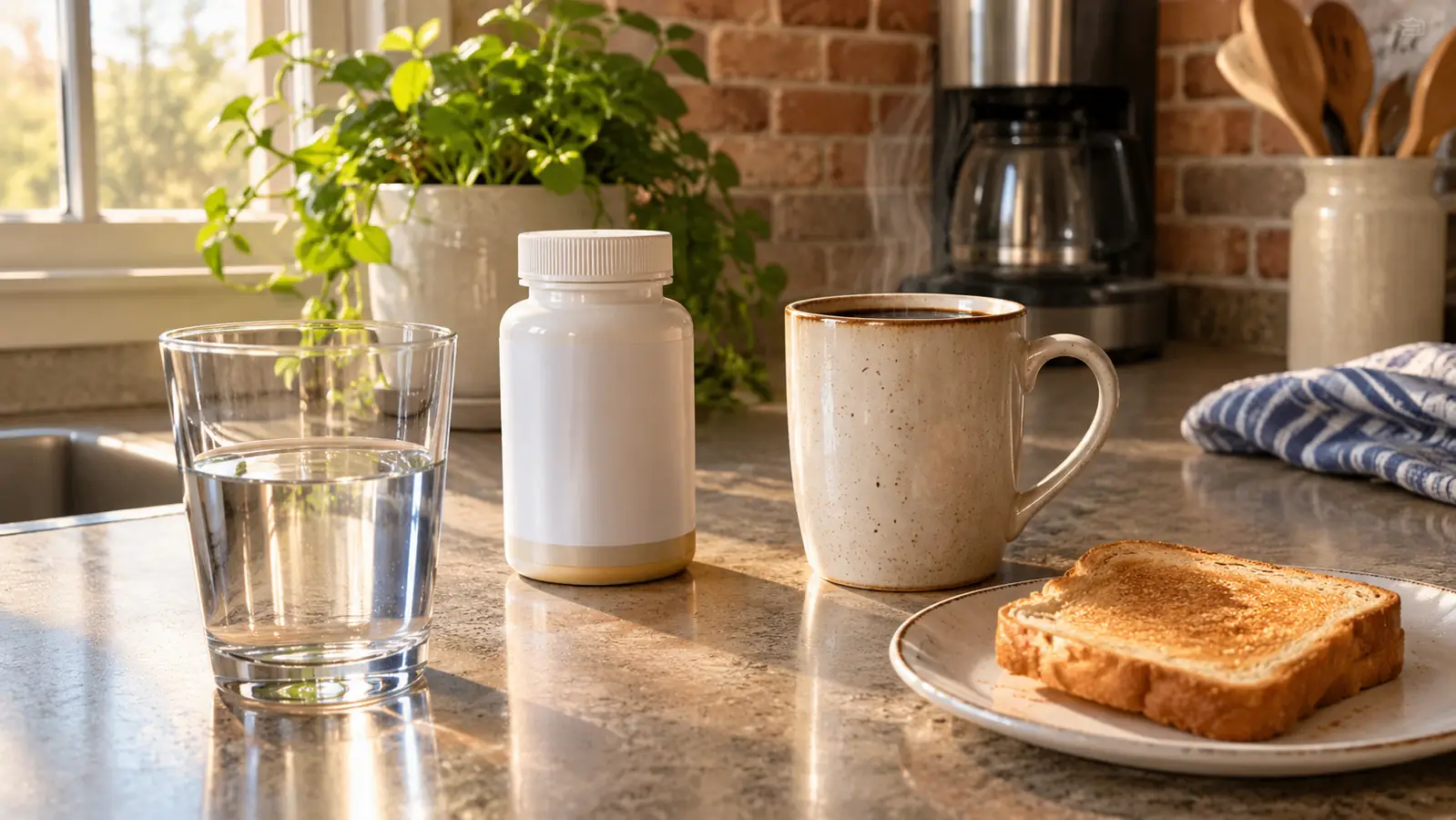
I spent twenty-six years reading ingredient lists in a school cafeteria, and I did not stop when I retired in June 2024. These days the labels are on supplement bottles, and the aisle that gives me the most trouble is the one with the fish oil on one side and the krill oil on the other. Short answer: for my own routine I picked Nature Made Fish Oil, two softgels at breakfast, and eight months in I would pick it again. It was not a close call, and it had almost nothing to do with the word fish. It had to do with what the two labels were willing to tell me in plain numbers.
Here is the plain reason. The Nature Made label prints a number I can check: two softgels give 600 mg of omega-3, and 500 mg of that is EPA and DHA. It also says the oil is purified to remove mercury and other contaminants, which is the sentence I look for first on anything that comes out of the water. The krill bottles I read in the pharmacy aisle listed a smaller omega-3 number per capsule and leaned on words like phospholipid. That may suit somebody else just fine. I would rather have the number. I am not a doctor, nurse or dietitian, and nothing here is medical advice. Supplements support normal function and that is all I will claim for them.
| Nature Made Fish Oil | Krill Oil | |
|---|---|---|
| Omega-3 form | Fish oil, labeled by total omega-3 with the EPA and DHA split printed | Krill oil, where the labels describe omega-3 in phospholipid form |
| Omega-3 per serving | 600 mg omega-3 per 2 softgels, 500 mg of it EPA and DHA | The krill labels I read listed a smaller omega-3 number per capsule |
| Softgels a day | 2, printed on the label | Often 2 or 3 depending on the brand, to reach a similar total |
| Supply math | 90 softgels, labeled a 45-day supply at two a day | Smaller counts on the bottles I picked up, so the supply runs out sooner |
| Capsule size | Standard softgel. Not small, and I notice it going down | Smaller capsules, which is a real advantage if large pills are a problem |
| Antioxidant on the label | None listed beyond the omega-3 | Astaxanthin is named on the krill labels I read |
| Purification statement | Label states the oil is purified to remove mercury and other contaminants | Not every krill label I read said anything about purification |
| Shellfish | Fish oil, no shellfish involved | Krill is a crustacean, so a shellfish allergy rules it out |
| Additives and flavor | Gluten free, dairy free, no artificial flavors, unflavored | Varies by brand, and several listed a flavored capsule |
| Best for | Someone who wants a printed dose and a long supply | Someone who wants a small capsule and does not mind reading more bottles |
How I Read Both Labels
I should be upfront before that table gets treated as gospel. I have never bought krill oil. I have never swallowed one. Every krill comparison in this article comes from standing in the aisle and reading the bottles, the same way I read the back of a bulk oatmeal box for twenty-six years. That is a real method, but it is not the same as taking the thing, and I will not pretend otherwise.
What I look for on an omega-3 label, in order: the total omega-3 number, the EPA and DHA split, the serving size, how many softgels that serving actually is, what else sits in the capsule, whether the label names an allergen, and whether there is a purification statement. Four of those seven are usually printed in small type near the bottom, which is exactly where a lot of bottles get vague.
The fish oil label answered all seven. The krill labels I picked up answered most of them, but the omega-3 number was lower per capsule, which meant more capsules to reach the same total. That is arithmetic, not opinion. Whether it matters to you depends on how you feel about swallowing capsules and how much label reading you want to do in the aisle.
Twenty-six years of cafeteria work is where the habit came from. Four hundred lunches a day, and every bulk box that came through the back door carried a list somebody had to read before it went into a pot. You learn to start at the serving size, because a number means nothing until you know what it is a number per. Then you read down. I do the same thing now, except the box is a bottle and the pot is my own breakfast.
Where Nature Made Fish Oil Wins
The number is on the label, and it is the number I came for. Two softgels, 600 mg of omega-3, 500 mg of it EPA and DHA. When I brought my printed pages to Dr. Alvarez in late February, that was the line I pointed at. She read it and okayed it for me. I am not going to tell you it is right for you, because I do not know your medications or your history, and that is a conversation for your own doctor or pharmacist.
The purification sentence matters more than people give it credit for. This label says the oil is purified to remove mercury and other contaminants. Of the five bottles I take, this is the one where that line decides it for me. Krill is a small creature low in the food chain, and the krill bottles I read did not always carry a purification statement at all.
I also do not eat fish. Have not since I was a girl. I simply do not like it, and I have not eaten it since I was a girl. That is the honest job this bottle does in my routine: it covers the fish I am not eating, in a form I will actually take twice a day.
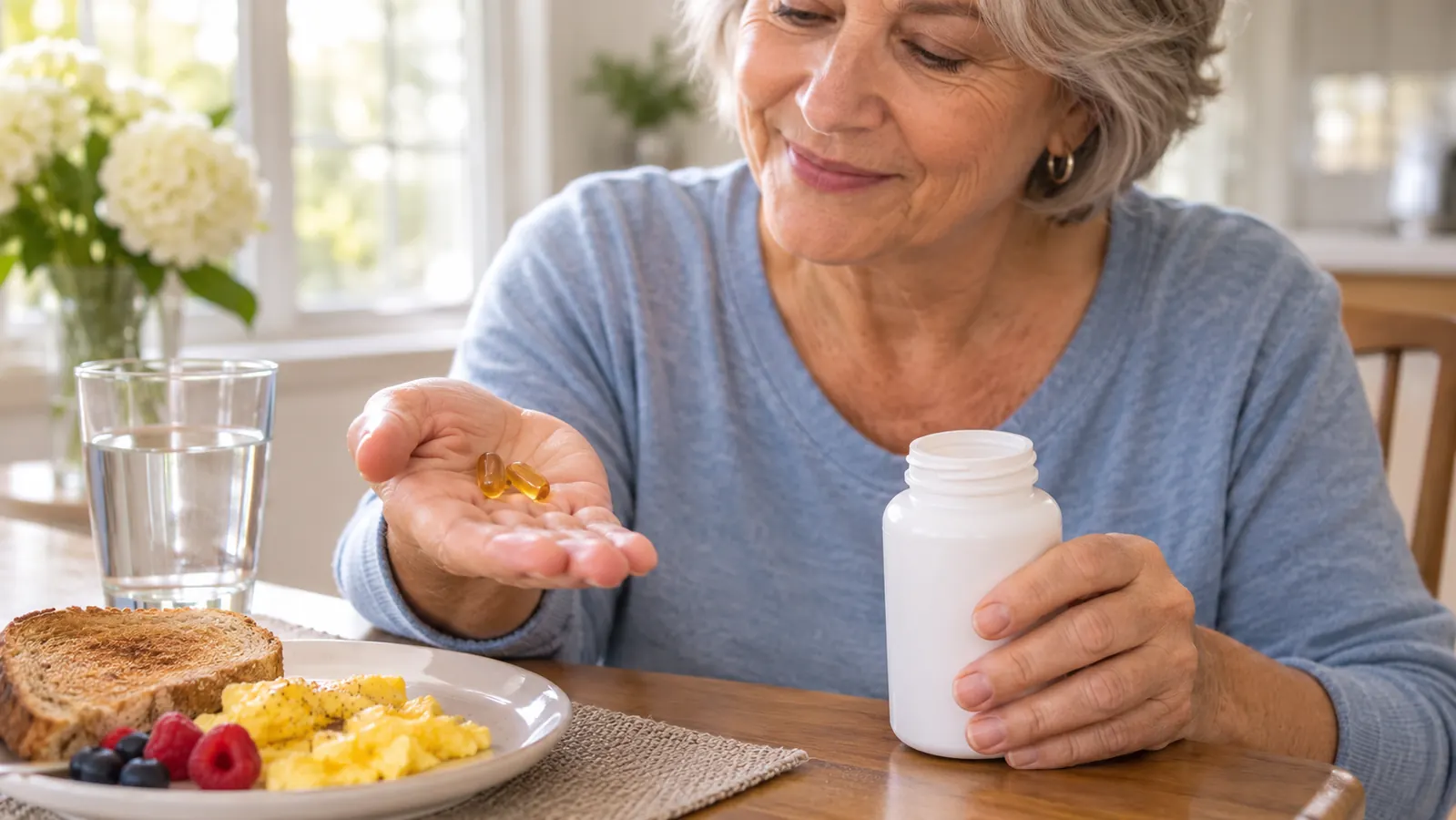
The rest of the label is quiet in a way I like. Gluten free, dairy free, no artificial flavors, unflavored. Nothing added to make it taste like citrus or vanilla. I take two softgels at 7:30 in the morning with my oatmeal and a glass of water, alongside my D3 and K2, my B-complex and my probiotic, and I do not taste a thing. The supply is easy math too: a 90 count bottle is labeled a 45-day supply at two a day, which I can work out on my fingers at the pantry shelf where the bottle lives.
That supply math is the part I do in my head every time I take the bottle down. Ninety softgels, two a day, forty-five days. I bought all five bottles in one Amazon order and started them the same Monday, so this one runs out on a schedule I can predict, and I am on my sixth bottle now. A bottle that tells you roughly when it will be empty is a small thing. It is also the reason I am not standing in an aisle doing arithmetic on my phone trying to work out how long a purchase lasts.
Where Krill Oil Wins
The capsules are smaller. That is the first thing I noticed, reading both labels in the aisle. If you are someone who dreads a large softgel and puts off taking it because of the size, krill has a genuine advantage and no label argument of mine changes that. A supplement you avoid opening is not doing its job, no matter how good the printing is.
The second thing is astaxanthin. Every krill label I read named it, and this fish oil label does not, because fish oil does not carry it. There is also the phospholipid form, which is the phrase krill sellers lean on hardest. I cannot verify absorption from the outside of a bottle, and I am not going to pretend I can. I will say only this: if those two things are what you went looking for, krill is where they are, and you should read those bottles with the same seven questions I use.
Two softgels, 600 mg of omega-3, 500 mg of it EPA and DHA, and a sentence saying the oil was purified. That is the whole reason I picked the fish oil.
The bottle whose label answered every question I had
Two softgels with a meal, 600 mg of omega-3, and a purification statement printed where I could read it. That is the one on my pantry shelf.
Amazon Check Today's Price on Amazon →What Is Actually In The Bottle I Take
Since the bottle is on the shelf behind me, here is the whole of it without the sales language. Nature Made Fish Oil, 1000 mg softgels, 90 to a bottle, a 45-day supply at the labeled serving of two softgels a day taken with water and a meal. Each serving carries 600 mg of omega-3, of which 500 mg is EPA and DHA.
It is gluten free, dairy free, unflavored, and made without artificial flavors. The softgels are a standard size, not a small one. I want to be honest about that, because if capsule size is the thing that stops you, this is not the bottle that solves it. That is a krill advantage and I already gave it to them.
The bottle itself is small enough to hold in one hand, about five inches tall and a bit over six ounces with the softgels still in it, and it lives on the second pantry shelf beside the coffee with the other four. I take it down at 7:30, tip two into my palm, put it back, and that is the whole interaction. No measuring, no powder, no mixing, nothing to refrigerate, and nothing to remember past the two softgels and the glass of water beside my plate.
The one thing this label asks of you is the meal. Two softgels with water and a meal. That is not a suggestion in small print to be skimmed past, and I learned that the hard way on my second morning.
The Morning I Took Them Wrong
Tuesday, March 3, my second morning on all five bottles, I was in a hurry. I took the two softgels with water before I ate anything, even though I had read with a meal on the label with my own eyes the day before. About ten minutes later I burped fish for roughly an hour. Not delicate, not once. For an hour.
A few days later I mentioned it to Dana at the pharmacy counter. She said to do what the label says. That was the whole of her advice and it was enough. I have taken them with my oatmeal ever since and it has not happened again. If you take fish oil on an empty stomach and it comes back at you, you have not bought a bad product. You have skipped a sentence.
Here is the practical version, since I have now taken these for eight months. The meal is not decoration. Oatmeal and one slice of toast is what sits in front of me at 7:30, and the two softgels go down in the middle of it, not before. If your own breakfast is a cup of coffee and a look out the window, that is the morning to slow down and eat something first, because that one instruction on the label is what decides whether you taste fish an hour later.
Two Questions To Settle Before You Pick
The first is shellfish. Krill is a crustacean. If you react to shellfish, that ends the krill conversation right there, and it is the sort of thing a label names in small type and a shopper skims straight past on the way to the omega-3 number.
The second is medication. If you take a blood thinner, or anything else on a schedule, ask your pharmacist before you add either bottle to your morning. Your pharmacist can check that for you, and Dr. Alvarez sees the whole list once a year at my physical. I am a retired cafeteria manager. I read labels well. I do not read your chart, and I am not going to guess at it.
Who Should Buy Which
Buy the fish oil if you want a printed omega-3 number you can hold against another bottle, if a purification statement on the label matters to you, if two capsules a day is fine with your routine, and if you like a supply that divides cleanly into 45 days. That is my routine and it has held for eight months without a single change.
Buy the krill oil if the capsule size is what stops you, or if astaxanthin and the phospholipid form are what sent you looking in the first place. Those are real differences and I am not going to talk you out of them. Just read the omega-3 number and the serving size before you commit, because a smaller capsule usually means more of them to reach the same place.
And if you take nothing else from a woman who read labels for a living for twenty-six years: pick the bottle you will actually open tomorrow morning. The best label in the aisle does nothing at all from a shelf, and the second-best label you take every day beats it walking away.
Two softgels, one meal, and a label you can read in the aisle
600 mg of omega-3 per serving, purified to remove mercury, gluten free and unflavored. Take it with breakfast, the way the label asks.
Amazon Check Today's Price on Amazon →