
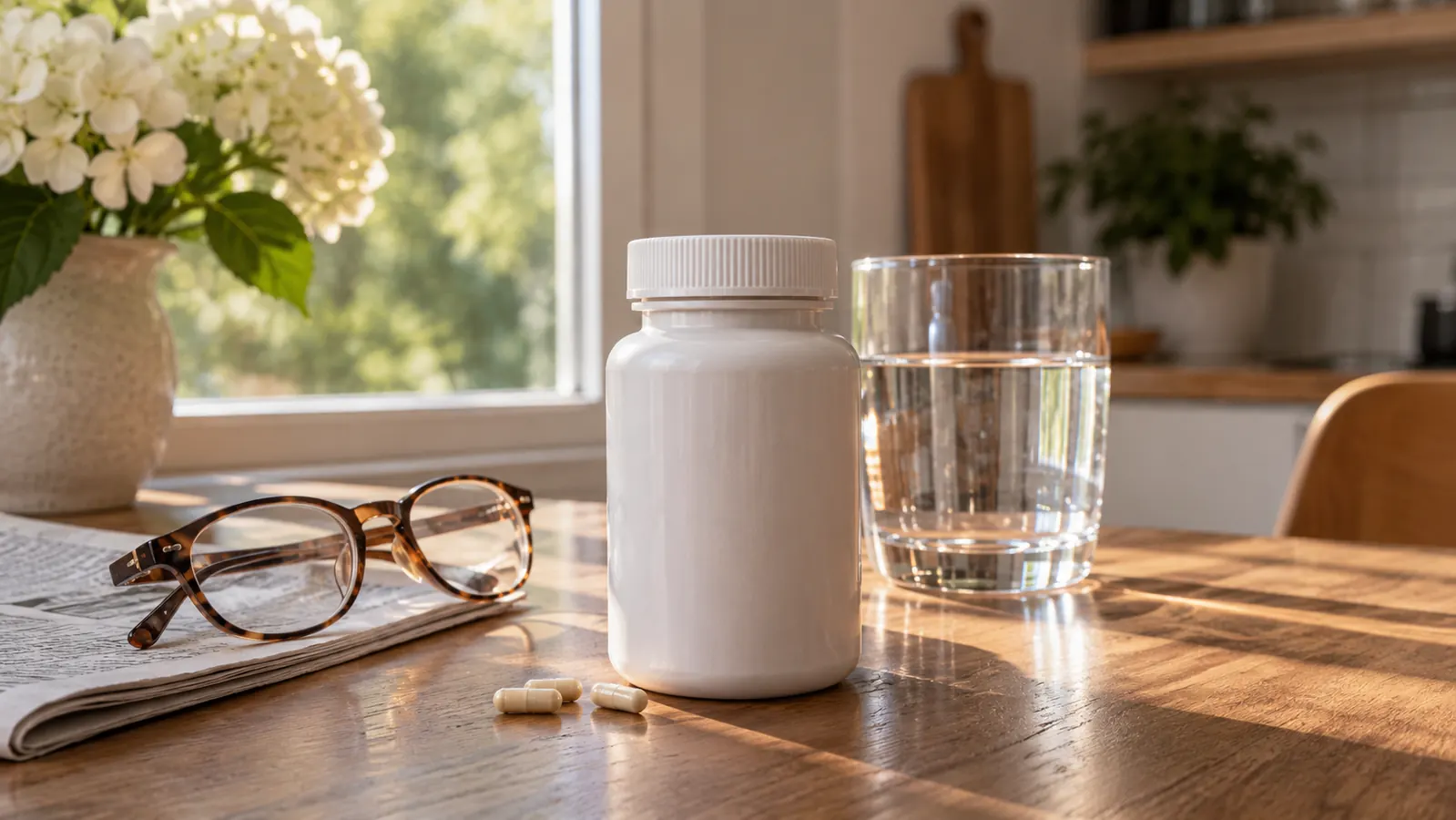
I read the Sports Research Vitamin D3 + K2 label four times before I put it in my cart. Not because it was hard to follow. Because I spent 26 years reading ingredient lists in a school cafeteria, about 400 lunches a day, and retiring in June 2024 did not turn that habit off. Reading a label was the part of that job I was best at. I still do it in the pharmacy aisle, one bottle in my hand and my reading glasses in the other, turning the panel toward the light until the print behaves.
Here is what this one says, in plain numbers. One softgel a day delivers 125 mcg of vitamin D3, which is 5000 IU, sourced from lichen, plus 100 mcg of vitamin K2 as MK-7 from fermented chickpeas, carried in coconut oil. Sixty plantgels to the bottle. That is a high dose of D3, higher than plenty of what sits on a drugstore shelf, and it is the reason I did not start this on my own say-so. I am not a doctor, a nurse or a dietitian, and I will not write like one. I am 58, I live in Conway, Arkansas, and I ask before I add anything to my own shelf.
The Quick Verdict
A short, honest panel: D3 and K2 named with amounts and forms, one small softgel, sixty to a bottle. I feel nothing from it, and I would buy it again on the label alone.
Amazon Check Today's Price →Two vitamins, one softgel, nothing to remember twice
If you want D3 and K2 together in a single plantgel instead of two bottles fighting for shelf space, this is the one I take at breakfast. The full panel is on Amazon if you want to read it the way I did.
Amazon Check Today's Price on Amazon →How I've Used It
At my yearly physical in late February 2026, I asked Dr. Alvarez which basics made sense for me at 58. I had printed five Amazon label pages at home that week and brought the paper with me in a folder. I wanted her reading the actual panel, not my summary of it. She went through the Sports Research page line by line and okayed that dose for me specifically, which I will come back to, because it is the most important sentence in this whole review.
Then I took the same printed pages to Dana at the pharmacy counter and she looked them over once. Neither of them saw a bottle, because there was not one yet. Nothing had been ordered. I bought all five together in one order after those two conversations and started them all on Monday, March 2, 2026, which means I have been at this for eight months as I write.
The routine has not moved since. Breakfast is 7:30 and it is oatmeal and one slice of toast, same as it has been for years. The D3 + K2 softgel goes down with the other three breakfast items: two fish oil softgels, one B-complex capsule, one probiotic tablet. Magnesium is my supper one at 6:00 and it is never a morning pill. Five bottles, one order, one shelf, one order of operations that I could do half asleep and often have.
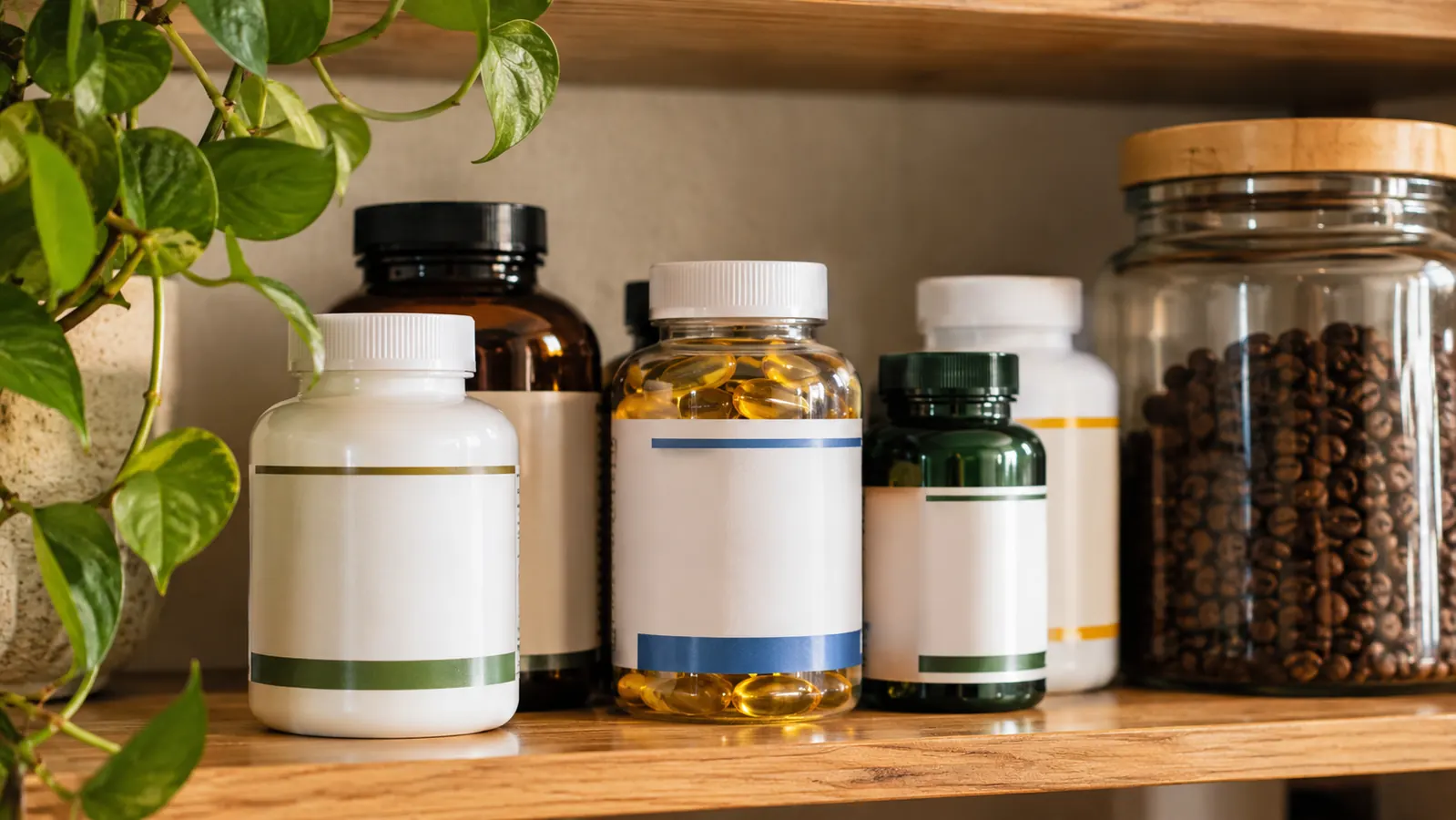
They live on the second pantry shelf beside the coffee. I take the bottle down at the meal, put it back where it was, and sit down to eat. No organizer, no counter clutter, no fuss. I am on my fifth bottle of this one now, and that is the review that matters most to me. Anything I have bought five times has already proven it is easy enough to keep.

What's Actually on the Label
Start with the form. It is a softgel, which this label calls a plantgel, and it is vegan, gluten free and unflavored. The D3 is cholecalciferol sourced from lichen rather than lanolin, which is where most D3 comes from. If you keep a vegan kitchen, that single line is the reason this bottle exists at all, and it is the first thing I checked. A D3 that comes from a plant source is not the default on that shelf, and the Sports Research panel says so without making a speech about it.
The K2 is MK-7 from fermented chickpeas, and the listing describes MK-7 as the most bioavailable form of K2. Both vitamins sit in coconut oil. That detail matters more to me than it might to you. Vitamin D is fat soluble, and a fat-soluble vitamin delivered in fat reads to me like a label written by somebody who was paying attention to the same thing I was.
The bottle is small. The listing gives it as 2 by 2 by 3.65 inches and 1.1 ounces, roughly the footprint of a spice jar. When five bottles share one pantry shelf, small is not a marketing word, it is a practical one. The softgel is described as easy to swallow and the flavor line says unflavored. There is nothing to taste, which is the only thing I have ever asked of a pill.
Sixty plantgels at one a day is two months. I check that number on every bottle now. A good panel inside a bottle that empties in three weeks turns a routine into an errand, and a bottle that lasts is easier to live with.
The Dose Question I Asked First
5000 IU is not a small number, and I want to be straight about that before anything else. Plenty of D3 bottles sit well below it. I read several of those labels in the pharmacy aisle before I decided, and I did not buy them, so I cannot tell you how they feel or how they compare in the body. What I can tell you is that several of them were D3 alone, with no K2 anywhere on the panel.
That was the difference for me. D3 and K2 are described as working together, with D3 supporting calcium absorption and K2 supporting proper calcium metabolism. Mind the word support. Nothing on this label claims to treat, cure or prevent anything, and neither will I. Dr. Alvarez was the one who said 5000 IU was reasonable for me in particular. That is a conversation to have with your own doctor, not one to borrow from mine, and it is worth having before you order rather than after.
One more thing, and I would say it out loud if you were standing next to me at the counter. If you take a blood thinner, K2 is not a vitamin to add on your own. Dana raised it when we got to that page and she was right to. Anyone on prescription medication should carry the label to a pharmacist before the first dose, not after. I take no prescription medication and I still asked twice.
Eight Months In: What I Notice and What I Don't
I feel nothing from this one. Nothing. No rush, no change in my mornings, nothing I could point to if you asked me across the kitchen table.
I say that plainly because the bottle deserves a plain answer. Dr. Alvarez did not hand me a result to watch for. She called this a basic, the way a foundation is a basic, and said the point of a basic is that you do not notice it doing its work. Eight months in, that is exactly my report, and I am not going to dress it up to make a better story. A review that promised you fireworks from a vitamin would be a review you should not trust.
So why keep going? Because the reason I started has not moved. It covers a bone and calcium basic in one softgel, at a dose my own doctor okayed, in a bottle small enough that I actually reach for it at 7:30 without thinking. If you need a product that announces itself, this will disappoint you. If you are building a dull routine you intend to keep for years, the quiet is the point, and the quiet is what I have.
What the Label Cannot Tell You
A label is a list of what is in the bottle. It is not a promise about what happens in your body, and no panel I have ever read has been able to tell me how I will feel in month eight. That is not a knock on this one. It is true of every bottle on every shelf in the store, and it is the reason I get impatient with reviews that pretend otherwise.
What this panel does is state the amount and the form plainly, which is not universal. Plenty of D3 bottles print a number in IU only, or name K2 without saying which form it is. Here you get 125 mcg and 5000 IU side by side, and MK-7 named outright. For a reader, that is the difference between a claim and a fact, and facts are the only thing I can check in an aisle with bad lighting.
What it cannot tell you is whether 5000 IU is your number. That comes from your own doctor and your own history. Mine said yes for me in February, and I have taken it since. That is one woman and one conversation, not a rule for a household, and it is not a rule for yours either.
The Case for One Small Bottle
There is a version of this where you buy D3 in one bottle and K2 in another. I read those labels too, standing right there in the aisle. Two bottles means two doses to remember, two spots on the shelf, and two things running out on different days. I am not organized enough to enjoy that, and I say so as a woman who once ran a cafeteria feeding 400 people at a time.
One softgel at breakfast removes the decision entirely. It goes down with the fish oil, the B-complex and the probiotic, and it is finished before the oatmeal cools. That is the whole argument, and it is not a dramatic one. It is the kind of argument that survives a Tuesday, which is more than I can say for most of what convinces me in a store.
The other thing I would tell you is that the panel is short. D3, K2, coconut oil, the plantgel itself. After 26 years of ingredient lists, a short panel reads as a deliberate one to me, and deliberate is what I look for now. The Sports Research bottle sits beside the coffee where I can reach it and not at the back of a drawer where I cannot.
What I Liked
- Two vitamins in one softgel, so there is no second bottle to remember at 7:30
- D3 from lichen and a plantgel, which suits a vegan kitchen
- Names the amount and the form: 125 mcg (5000 IU) D3 and 100 mcg of K2 as MK-7
- Carried in coconut oil, which fits a fat-soluble vitamin
- Unflavored and described as easy to swallow, with nothing to taste
- Sixty plantgels at one a day is a two-month bottle
Where It Falls Short
- 5000 IU is a high dose and not a number to guess at
- K2 needs a conversation first if you take a blood thinner
- I feel nothing from it, so there is no feedback telling you it is working
- One dose size only, so there is no lower option in this bottle
125 mcg of D3 from lichen. 100 mcg of K2 as MK-7 from fermented chickpeas. One softgel. That is the whole panel, and it is the reason I bought it.
Who This Is For
This is for someone who reads the panel before the front of the bottle, the way I do. It suits a vegan kitchen, since the D3 is from lichen and the capsule is a plantgel. It suits a person who wants D3 and K2 in one dose and would rather not juggle two bottles on a shelf that is already crowded. It suits a small household where one bottle has to do the job for one person, and it suits someone who likes a short ingredient list they can finish reading in under a minute.
Most of all it suits someone who has already asked their doctor whether 5000 IU is right for them, because on a dose this size that question comes before the purchase, not after. If you take a blood thinner, this is a conversation first and a purchase second. I am not qualified to tell you which way it should go. Dr. Alvarez and Dana were the two people I asked, and I would send you to your own version of them before you order anything.
Who Should Skip It
Skip it if your doctor has you on a different D3 amount, because a label is not a prescription and mine is not yours. Skip it if you take a blood thinner and have not asked anyone yet. Skip it if you want to feel something happening, since eight months in I cannot report a single sensation, and I would rather tell you that now. Skip it if you want a lower daily dose or a liquid, because 5000 IU is what this bottle is and it does not negotiate with you. And skip it if you are shopping for something to fix a specific problem. This is a basic, and I take it the way I take a basic.
If your doctor okays 5000 IU, this is the easiest way I found to take it
One plantgel at breakfast, sixty to a bottle, D3 and K2 on the same short panel. Read the label the way I did before you decide, and ask your pharmacist about the K2 if you are on anything prescription.
Amazon Check Today's Price on Amazon →